The New EU Customs Rule That's Actually a Product Data Problem
From 1 November 2026, every B2C parcel into the EU needs three product identifiers per line item, two of them mandatory. Here's what's changing, why it's a data problem, and what to fix before the deadline.
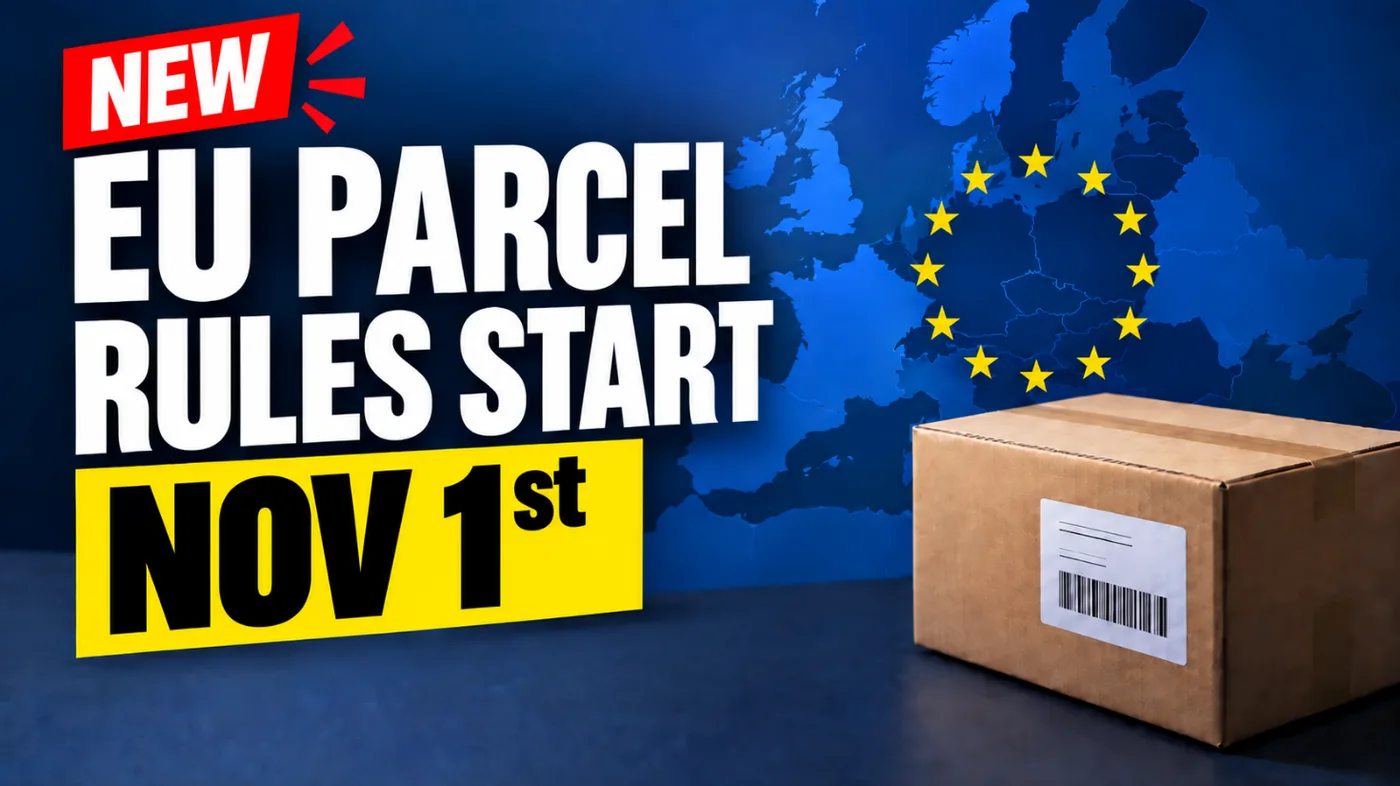
Everyone’s reading the new EU customs rule as a paperwork update. It isn’t. It’s a product data test, and most brands’ catalogues are about to fail it.
From 1 November 2026, every B2C parcel shipped into the EU needs three product identifiers on the customs declaration, per line item, not per parcel. Two of them are mandatory. Get them wrong, or leave them blank, and the parcel doesn’t clear. It sits.
What’s actually changing
The three fields are:
- Merchant Product ID (mandatory). Your own SKU. The code you already use internally to identify the item.
- Manufacturer Product ID (mandatory). The maker’s or supplier’s own code for that item, not yours, theirs. Model number, part number, factory SKU.
- Standardised Product ID (required where it exists). A recognised barcode standard: GTIN, EAN, UPC, or ISBN.
The first two are compulsory on every line. The third is compulsory only in the sense that if the product has one, you can’t leave it off. A plain tote bag with no retail barcode is fine with two out of three. A branded phone case with a proper EAN needs all three, and leaving the barcode off when it exists is itself a gap.
This hasn’t come out of nowhere. It’s been declarable on a voluntary basis since 1 July 2026, the same date the EU scrapped its €150 duty-free threshold and brought in the temporary €3 flat duty per item. That was deliberate: four months to let sellers, marketplaces and carriers test their data before the rule with teeth arrives. 1 November is when the test window closes and the requirement becomes real. It’s also the same reform that eventually lands on the EU’s Customs Data Hub in mid-2028, when full classification-based duty replaces the temporary flat rate. The €3 duty was the money change. The PID mandate is the identity change. Same reform, different half.
Why this is a data problem, not a customs problem
Before this, a sub-€150 parcel could clear on a loose description. “Phone case.” “Cotton tote.” Words that told a customs officer roughly what was in the box but didn’t tie it back to anything real. From 1 November, that stops being good enough. The declaration has to point to an actual catalogue entry, your code and the manufacturer’s code, sitting side by side.
Here’s the part that catches brands out: this isn’t a field you fill in once. It’s a chain. Product master data, order system, shipping label, customs declaration, broker, all have to carry the same code, consistently, for every SKU, every time. Break the chain anywhere and it surfaces at the one place you can’t fix it quickly: the border. If your M-PID says one product and the invoice or the physical goods say another, that mismatch is exactly what a risk-based system exists to catch.
Sound familiar? It should. It’s the same gap that shows up constantly on 3PL onboarding calls, just wearing a different uniform. Brands get asked for full SKU dimensions and weights, or what percentage of orders are multi-line, and the honest answer is “we’d need to pull that.” Nobody’s hiding the data on purpose. It just was never structured for someone else’s system to consume it on demand. EU customs is now that someone else, and it doesn’t wait while you go and pull a report.
The proof is in what happens when it’s missing
A declaration filed without the mandatory identifiers is treated as incomplete. Incomplete declarations don’t clear on schedule. What that looks like in practice: a customs hold while the missing code gets chased, a delivery delay measured in days rather than hours, your carrier’s brokerage team emailing you for a number you should have had ready, and at the sharp end, a penalty or a parcel refused and shipped back at your cost.
Carriers are enforcing this unevenly. Some of the larger networks are already asking for PIDs on EU B2C customs data. Others haven’t switched validation on yet. Don’t read a quiet carrier as a sign you’re exempt. The obligation sits on the declaration from 1 November regardless of whether your specific carrier has started checking for it.
Think of it like the border checkpoint that used to wave you through on a name
Picture a checkpoint that used to accept a boarding pass with just your name on it. Close enough, wave through. From 1 November, it wants your passport number too. If you know it, you’re through in seconds. If you don’t, you’re pulled out of the line to go and find it while everyone behind you keeps moving.
That’s what’s happening to every SKU crossing into the EU. Brands with clean, structured product data (SKU mapped to manufacturer code, barcode attached where one exists) walk through. Brands still running on loose descriptions in a spreadsheet get pulled aside, one parcel at a time, for as long as the gap exists.
What to actually do before 1 November
Don’t wait for a held parcel to find out where your data’s incomplete.
- Pull your full SKU list and check it against manufacturer codes. If you don’t have a clean, one-to-one mapping between your own SKU and the maker’s or supplier’s code for every product you ship to EU consumers, that’s the gap to close first.
- Add barcodes where they exist. If a product carries a GTIN, EAN, UPC or ISBN, get it into your product master data now, not after a parcel gets held over a missing S-PID you actually had all along.
- Use the fact that this has been voluntary since July. If your systems can already declare a PID, test it now while a mistake costs nothing, instead of finding out live on 2 November.
- Ask your carrier directly whether they’re validating this yet. Not enforcing it is not the same as it not applying. Confirm, don’t assume.
- Treat this as a standing data discipline, not a one-off fix. New SKUs need the same three fields from day one, or you’re back here again with the next product launch.
The brands who sail through this are the same ones who show up to a 3PL conversation with clean SKU data already in hand: not because they predicted this specific rule, but because they treat their own product data as an asset worth maintaining, not a report they pull under pressure. If EU customs data readiness is the thing exposing the gap in your catalogue, a 3PL partner who already runs EU B2C volume day to day has usually solved this exact problem for other brands first. That’s the kind of operational fit the Lead Exchange screens for before we ever make an introduction, not just who’s cheapest.