FBA vs 3PL: Which One Actually Suits Your Brand?
Amazon FBA and a dedicated 3PL solve different problems. How to decide which fits your brand, including the hybrid setup many sellers end up running.
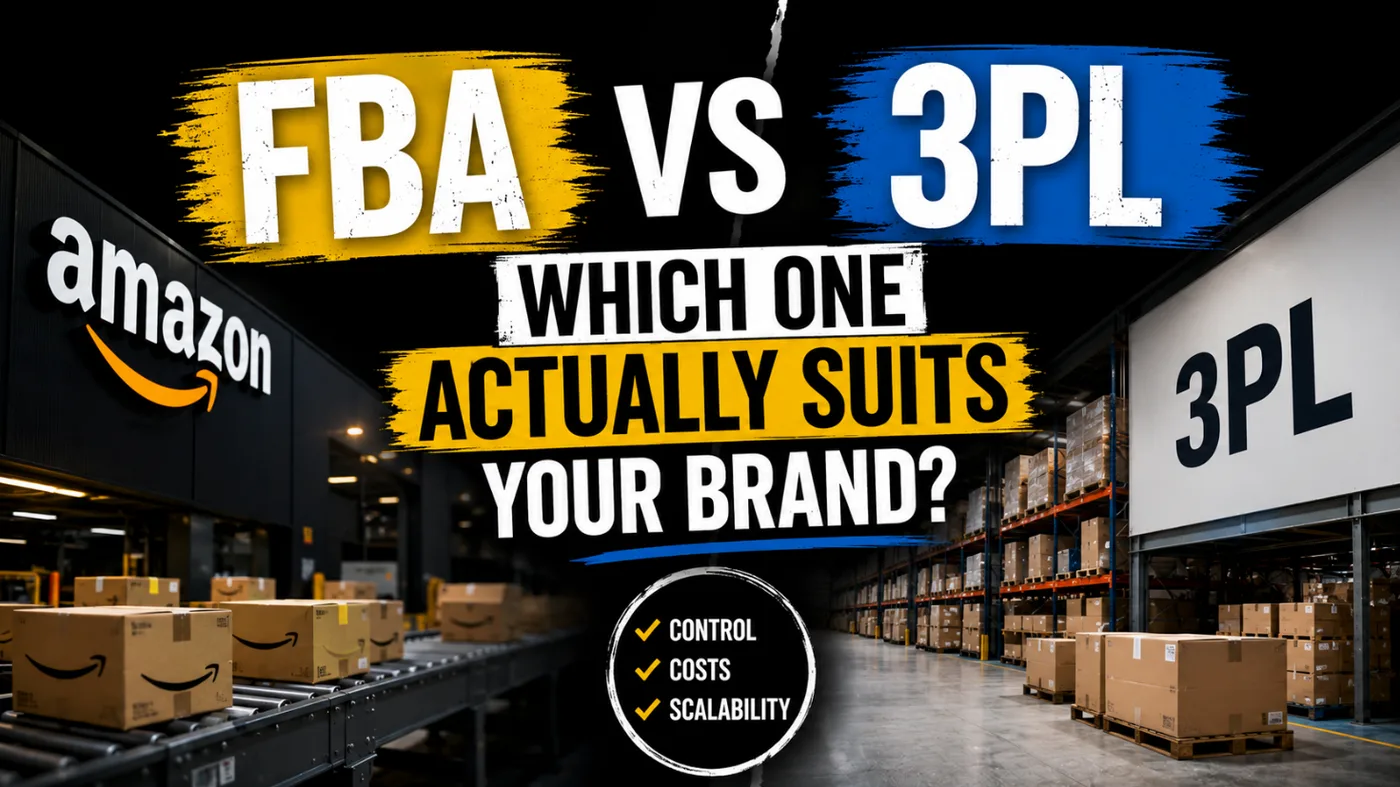
Picking between Amazon FBA and a dedicated 3PL isn’t a “which is better” question. It’s a “which is better for this specific channel mix, at this specific stage” question, and most brands answer it once and never revisit it.
That’s the actual problem. Not choosing wrong on day one, but never checking whether the answer’s changed.
What FBA genuinely gets you
Fulfilment by Amazon plugs you straight into infrastructure it took Amazon decades and billions to build. Prime eligibility, Amazon’s delivery speed, Amazon’s customer trust, Amazon’s returns handling, all without you touching a warehouse. For a seller whose demand is genuinely Amazon-first, that’s a real, hard-to-replicate advantage. You’re renting the fastest fulfilment network in the country.
What it costs you that isn’t on the invoice
The trade-off is control, and it’s a bigger trade than most sellers clock going in. Your inventory can get commingled with other sellers’ stock of the same product, which means a customer’s poor experience with someone else’s item can land on your account. Packaging is dictated by Amazon’s requirements, not your brand’s. Slow-moving stock attracts long-term storage penalties, and your account’s Inventory Performance Index affects how much storage capacity you’re even allowed. And critically: it’s built for orders that arrive through Amazon. The moment you’re selling on Shopify too, on wholesale, on TikTok Shop, FBA either can’t help or gets awkward fast (multi-channel fulfilment exists, but it’s not what FBA was built for).
What a dedicated 3PL gets you instead
A 3PL fulfils your brand’s orders wherever they come from: your own site, wholesale, marketplaces, all through one stock pool. You control the unboxing experience, the packaging, the inserts, the brand touchpoints Amazon strips away. Amazon Supply Chain’s own pricing guidance for evaluating 3PLs breaks cost down into inbound shipping and receiving, storage and warehousing, handling, shipping, and aftercare, which is a useful lens even when you’re the one being quoted: it’s the same handful of levers regardless of which 3PL you’re comparing.
The trade-off runs the other way. You lose the Prime badge unless you separately qualify for Seller Fulfilled Prime. You’re now managing a 3PL relationship, onboarding, SLAs, integration, rather than letting Amazon’s infrastructure absorb that. And you need enough order volume and predictability to make outsourced fulfilment worth it, the same threshold that applies whether you’re moving off self-fulfilment or off FBA.
Why this shows up as a real decision, not a debate
The advantage of actually working through this properly, rather than defaulting to whichever model you started on, is that most growing multichannel brands don’t end up picking one. They end up running FBA for their Amazon-only volume (where the Prime badge earns its keep) and a 3PL for everything else, DTC, wholesale, other marketplaces, so each channel gets fulfilled by the model actually built for it. Getting that split right once saves you re-platforming your whole operation later when a second sales channel takes off and your all-FBA setup can’t flex to serve it.
The actual test
Ask honestly: is more than 80% of your volume genuinely Amazon-only, with no near-term plan to grow DTC or wholesale? FBA is probably still right, possibly with Seller Fulfilled Prime layered in as you grow other channels. Is your order mix already split, or splitting, across your own site and other channels? That’s the point to bring in a 3PL built for your actual order profile, not the first one that returns a quote.
Either way, the decision should be revisited as your channel mix changes, not set once and forgotten.
Book a Call or email hello@shipmax.co.uk.
Not moving 3PL this year? Save this article for when you are.
Best, Phil
Founder, SHIPMAX LTD