LINGO BUSTERS: The Ecommerce and Supply Chain Acronyms Worth Actually Knowing
The plain-English cheat sheet to ecommerce and supply chain acronyms, from 3PL and SKU to IOSS, DDP and COGS. What each one means, and why you'd care.
You’ve nodded along in a meeting when someone said “IOSS” like it was obvious.
You’ve read a 3PL quote with more acronyms than actual sentences.
You’ve Googled “what does DDP mean” under the table more times than you’d admit.
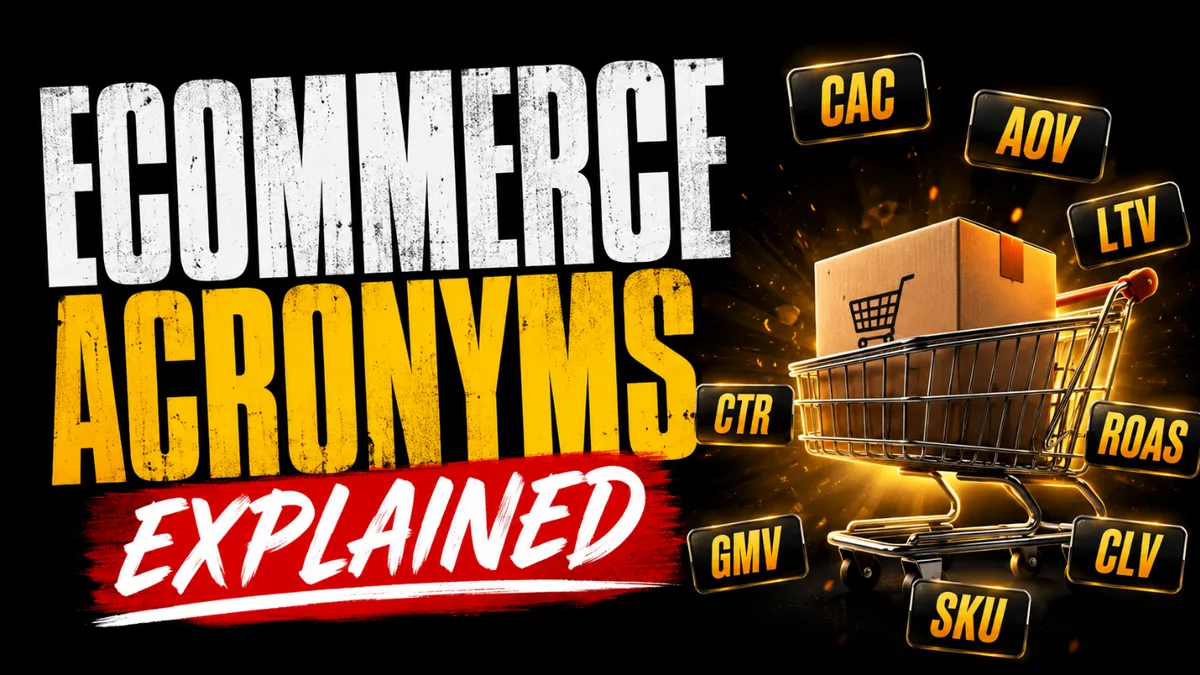
Fair enough. Ecommerce and supply chain run on acronyms, and most people learn them the hard way: mid-conversation, pretending they already knew.
So here’s the cheat sheet. No fluff, no filler, just what each one means and why you’d care. Bookmark it, send it to whoever on your team still says “the WMS thing” with a slightly panicked look.
Fulfilment and warehousing
- 3PL: Third-Party Logistics. A company that stores your stock and picks, packs and ships your orders, so you don’t have to run a warehouse yourself.
- WMS: Warehouse Management System. The software that tracks where every unit of stock actually sits inside a warehouse, and what’s happened to it.
- OMS: Order Management System. The software that takes an order from “customer clicked buy” through to “parcel left the building,” often stitching your storefront, WMS and carriers together.
- TMS: Transport Management System. Software for planning and tracking the actual movement of freight, from a single parcel to a full truckload.
- SKU: Stock Keeping Unit. The unique code for one specific product variant. Same t-shirt in three sizes and two colours is six SKUs, not one.
- MOQ: Minimum Order Quantity. The smallest amount a supplier or 3PL will let you order or commit to. Ignore it and you’ll get a quote that doesn’t match the one you expected.
- ASN: Advance Shipment Notice. A heads-up sent to a warehouse before stock arrives, telling them what’s coming and when. Skip it and your delivery sits on a loading bay while someone works out whose it is.
- POD: Proof of Delivery. The signature, photo or scan confirming a parcel actually reached the customer. The thing you need the second a “where’s my order” ticket lands.
Shipping, carriers and Incoterms
- DDP: Delivered Duty Paid. The seller pays all duty and tax upfront, so the customer’s parcel arrives with nothing extra to pay at the door.
- DAP: Delivered At Place (sometimes still called DDU, Delivered Duty Unpaid). The seller ships it, but the customer pays any duty or tax when it arrives. Great way to turn a happy customer into an angry one if you don’t warn them.
- AOV: Average Order Value. The average amount a customer spends per order. Quietly one of the most important numbers in deciding whether cross-border shipping even makes sense.
- LTL: Less Than Truckload. Freight that doesn’t fill a whole lorry, so it shares space (and cost) with other people’s shipments.
- FTL: Full Truckload. Freight that fills an entire lorry on its own. Usually faster and less handled than LTL, at a higher unit cost if your volume doesn’t justify it.
- BOL: Bill of Lading. The legal document and receipt for freight being shipped, listing what it is, how much, and who’s responsible for it in transit.
Customs and cross-border
- HS Code: Harmonized System code. The standard international code that classifies exactly what a product is for customs purposes. Get it wrong and duty gets calculated on the wrong basis, sometimes at the wrong rate entirely.
- EORI: Economic Operators Registration and Identification. The number a business needs to import or export goods through UK and EU customs. No EORI, no clearance.
- VAT: Value Added Tax. The consumption tax charged on goods and services. For cross-border ecommerce, who collects it and when is the bit that actually trips brands up.
- IOSS: Import One Stop Shop. The EU scheme that lets a seller collect VAT at checkout on low-value consignments (up to €150) and remit it centrally, instead of the customer getting a surprise charge at delivery.
- OSS: One Stop Shop. IOSS’s sibling scheme for VAT on goods already inside the EU, so a seller doesn’t need a separate VAT registration in every member state they sell into.
Ecommerce and marketplaces
- B2B: Business to Business. Selling to other businesses, not directly to the end consumer.
- B2C: Business to Consumer. Selling directly to the person who’s actually going to use the product.
- D2C: Direct to Consumer. A brand selling straight to customers through its own site, cutting out the traditional retailer in the middle.
- FBA: Fulfilled by Amazon. Amazon stores, picks, packs and ships your stock for you, in exchange for storage and fulfilment fees and a slice of control over how it’s handled.
- FBM: Fulfilled by Merchant. You sell on Amazon, but you (or your own 3PL) handle the storage and shipping, not Amazon.
The numbers everyone quotes
- SLA: Service Level Agreement. The contractual promise on how fast or accurately something gets done: dispatch time, pick accuracy, response time. The thing worth actually reading before you sign, not skimming.
- KPI: Key Performance Indicator. The specific number you track to know whether something’s actually working, not just whether it feels like it’s working.
- RMA: Return Merchandise Authorisation. The process (and usually the number) that authorises a customer’s return before it gets sent back, so it doesn’t land in a warehouse with no idea what it is or why it’s there.
- COGS: Cost of Goods Sold. The direct cost of producing what you sell. The number that matters more than revenue, because revenue without margin is just a bigger problem.
None of this is complicated once you’ve seen it written out plainly. It’s complicated when it’s buried in a rate card or dropped into a call with no explanation, which happens constantly in this industry.
Next time someone drops one of these into a sentence like it’s obvious, you’ll already know. And if you’re evaluating a 3PL and their quote is more acronym than explanation, that’s worth noticing too. SHIPMAX exists to help brands find partners who explain the acronyms instead of hiding behind them.
Book a Call or email hello@shipmax.co.uk.
Not moving 3PL this year? Save this article for when you are.
Best, Phil
Founder, SHIPMAX LTD