The Real Cost of Returns (and How to Stop Them Eating Your Margin)
UK ecommerce returns cost billions a year, yet most brands treat returns handling as an afterthought when picking a 3PL. Here's what good looks like.
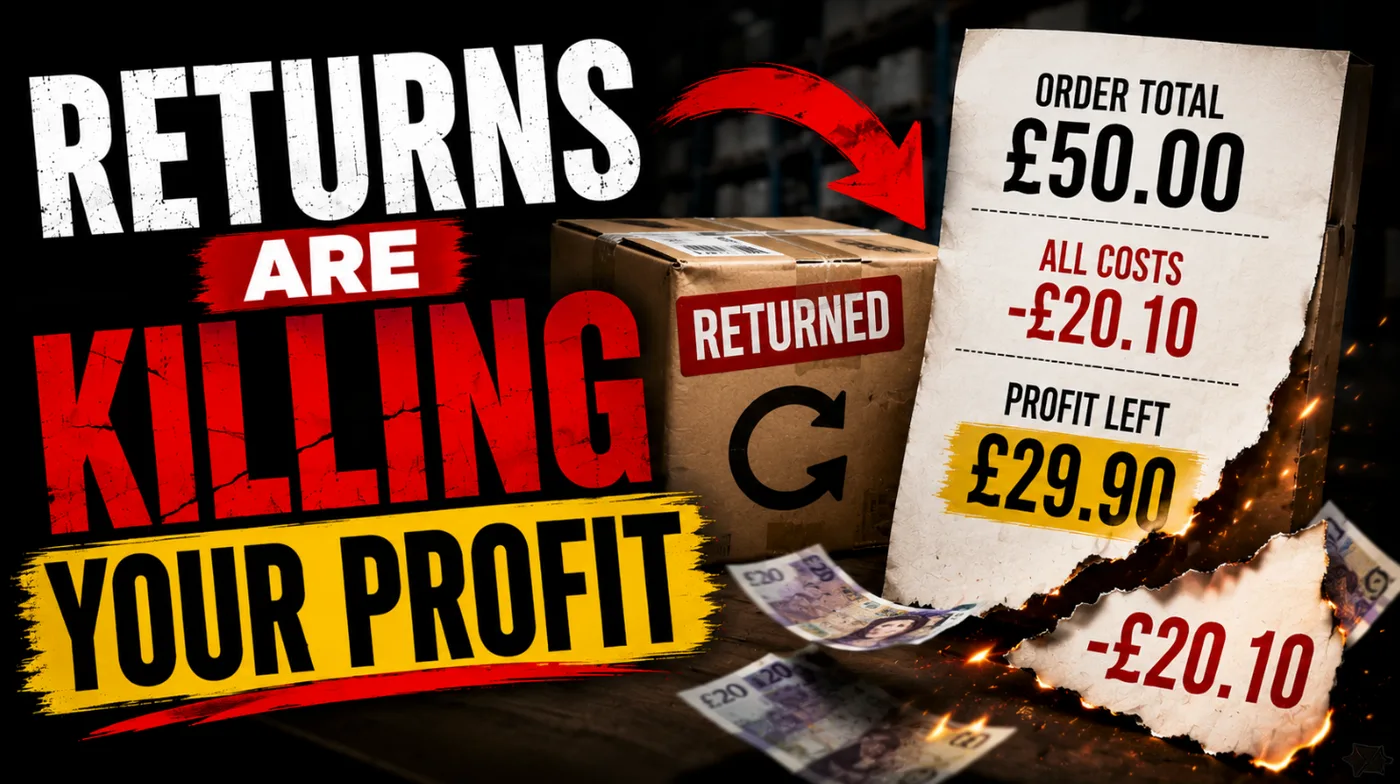
Returns aren’t a footnote. They’re a £25 billion problem.
Retail Economics and ZigZag put UK non-food online returns value at £25.1 billion in 2025, down slightly from £26.7 billion the year before, as tighter policies and return fees start to bite. The overall returns rate is still sitting around 19.5%. Whistl’s 2024 returns data found 49% of UK online shoppers returned something in the past year, rising to 60% among 16 to 34 year olds. And serial returners, just 11% of customers, generate close to a quarter of all returns.
If you sell online, some meaningful share of everything you ship is coming back. The question isn’t whether that’s happening. It’s whether your operation is built for it.
Most fulfilment setups are built for outbound only
Pick, pack, ship: most brands scrutinise a 3PL hard on that side, and rightly so. But a return isn’t just a dispatch running backwards. It’s its own operation with its own failure points:
Customer initiates the return. Eligibility gets checked. A label or QR code is generated. The parcel gets tracked back to the warehouse. It’s received, opened, and inspected. Someone grades its condition. A decision gets made: refund, exchange, store credit. Then it’s restocked, reworked, quarantined, or, in some categories, written off entirely. Inventory updates. The customer gets told what happened.
That’s a lot of steps for something that gets planned like an afterthought.
And it gets harder by category. Fashion and footwear need grading fast enough to resell the item while it’s still in season, or it’s dead stock. Electronics need testing, serial tracking and warranty rules applied correctly. Beauty, health and food items often can’t be resold once opened at all, which turns every return into a straight loss unless the policy accounts for it upfront.
Why this should change how you pick, or judge, a 3PL
Here’s the part that should worry you if you haven’t checked it: a 3PL can be genuinely excellent at outbound pick and pack, and still be weak at returns grading. Those are different skill sets, different workflows, and different staff training, and providers don’t always invest in both equally.
For fashion and other high-return categories, that gap is not a minor inconvenience. It’s the difference between a returned item going back on sale within 48 hours or sitting in a quarantine pile for three weeks while your working capital sits with it.
It matters for retention too, not just cost. DHL’s 2024 Delivery & Returns Report found returns experience directly affects customer satisfaction, and that a poor returns process leads shoppers to abandon future purchases entirely. Returns are a post-purchase trust moment. Get it wrong and a customer doesn’t just have a bad return, they quietly stop ordering from you again.
That tension is real, and it’s why more retailers are testing paid returns. ASOS moved to charge frequent UK returners a £3.95 fee unless they keep a threshold of items, part of a wider industry shift as fashion retailers try to control returns cost without wrecking the experience for normal customers. There’s no universal right answer here. The right policy depends on your margin, your category, and what your customers actually expect. Free returns for everyone isn’t automatically “good”, and a blanket fee isn’t automatically “bad”.
What good returns handling actually looks like
A returns operation worth trusting has: a clear policy stated before purchase, easy initiation with QR-code or printerless options, visible tracking for the customer, fast scan-on-receipt at the warehouse, objective (not vibes-based) grading rules, automated refund triggers with basic fraud checks, SKU-level reason codes that actually feed back into product pages and sizing guidance, and separate handling paths for resellable, damaged, opened and dispose-or-recycle stock.
If your current 3PL, or the one you’re about to sign with, can’t describe most of that when you ask, that’s your answer.
Test it before you sign it, not after
If you’re comparing 3PLs, put returns handling through the same scrutiny as outbound pick and pack. Ask for their average return-to-restock time by category. Ask how they grade condition. Ask what happens to opened beauty or food returns specifically, since that’s where the real margin leakage tends to hide.
A provider that can answer those questions in detail is telling you something. One that can’t is telling you something too.
Book a Call or email hello@shipmax.co.uk.
Not moving 3PL this year? Save this article for when you are.
Best, Phil
Founder, SHIPMAX LTD