The last US parcel loophole just closed. Here's what it means for your fulfilment.
US-bound parcels through the postal network just lost their duty exemption. Every parcel is now a formal customs entry. Here's the fix.
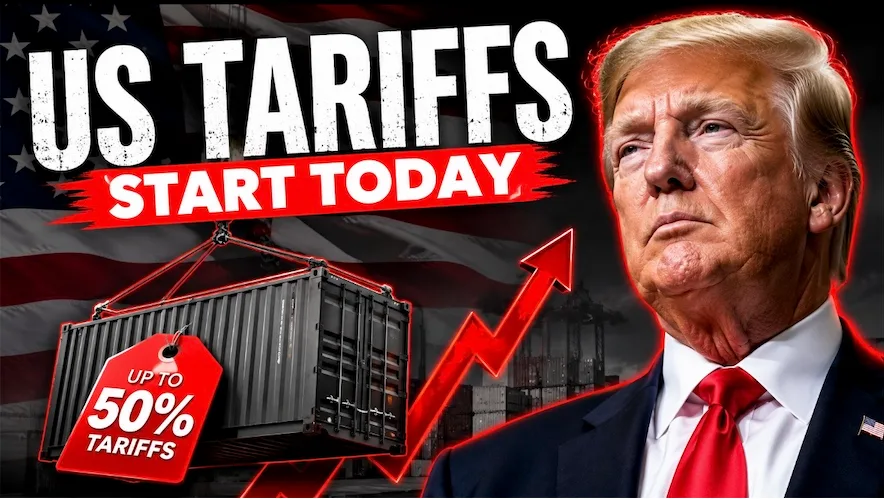
Today the last cheap loophole to post a parcel to America without customs duty disappeared.
At 12:01am US Eastern time, two things happened at once.
The Section 122 tariff, the temporary 10% global surcharge that’s applied since February, expired on schedule.
In its place, the US rolled out country-specific Section 301 tariffs for 60 trading partners. UK goods are capped at 10%. EU goods sit at 15% under the trade deal that landed on 1 July.
At the same moment, the US Postal Service lost its exemption. Standard duties, MFN, Section 232, Section 301, all of it, now apply to shipments moving through the international postal network.
Commercial couriers lost this shelter back in August 2025. Post has been the last hole in the fence. As of today, it’s closed.
What it actually means
So what does that actually mean if you’re a UK, EU or overseas brand still fulfilling US orders parcel-by-parcel from a home country warehouse?
Every single parcel now needs a proper 10-digit HTS classification. Whoever’s filing needs a continuous customs bond sitting behind it in CBP’s system.
Duties get reconciled monthly through an International Mail Duty Worksheet and paid by ACH by the 7th of the following month.
That’s not a postage label anymore. That’s a formal customs entry, on every parcel, at a volume postal systems were never built to process.
For the brand, that shows up as three things. Slower transit while parcels sit in a queue built for a fraction of this volume. Duty charged on the real landed value instead of slipping under a threshold that no longer exists.
And a customer at the other end who opens a “pay before delivery” notice they weren’t expecting, which is one of the fastest ways to turn a repeat buyer into a one-star review.
None of this is new in shape. It’s the same problem the EU created when it phased out its own de minimis exemption earlier this year: the customs event you used to dodge on cheap parcels now finds you anyway.
The fix is where the event happens, not how well you fill in the form
The brands that adjusted fastest didn’t get better at customs paperwork. They stopped generating a customs event on every single parcel.
Bring stock into the US in bulk, under a bonded or standard commercial entry, and the classification, duty and compliance work happens once, on the container, handled by people who do it for a living.
Every parcel that goes out afterwards is a domestic US shipment. No HTS code guesswork at 2am, no bond exposure per order, no surprise duty bill landing on your customer’s doorstep.
Bonded warehousing takes it a step further: duty and tax stay suspended until stock actually leaves the warehouse, useful if you’re testing US demand and don’t want to prepay tariffs on units that might sit for months.
It also fixes the thing tariffs didn’t break in the first place. Delivery speed and returns handling from a US-based 3PL beat a transatlantic parcel network on a normal Tuesday, let alone one that’s just been handed a wall of new paperwork.
What to ask a US-side 3PL
If you’re weighing this up, the questions to put to any US-side 3PL are the same ones that mattered before today, they just matter more now.
- Do they quote landed cost properly, not just freight.
- Do they hold HS codes at SKU level so nothing gets reclassified on the fly.
- Do they offer bonded or customs warehousing as an option, not just standard receiving.
- Is their bond already in place, or is that still your problem.
Some fulfilment partners have already built for exactly this. Multi-site US networks, bonded warehousing, brokerage handled in-house rather than bolted on.
That capability existed before today. It just went from “nice to have if you’re scaling” to “the difference between a parcel that clears and one that sits.”
If you’re trying to work out whether your current setup can absorb this, or which partner actually has the US footprint to take it off your plate, that’s exactly the kind of matching problem the SHIPMAX Lead Exchange exists to solve.
Book a Call or email hello@shipmax.co.uk.
Not moving 3PL this year? Save this article for when you are.
Best, Phil
Founder, SHIPMAX LTD