How Do You Know When You're Ready for a 3PL?
Not every brand is ready to outsource fulfilment yet, and that's fine. Here's how to actually tell, based on the signals that matter more than revenue.
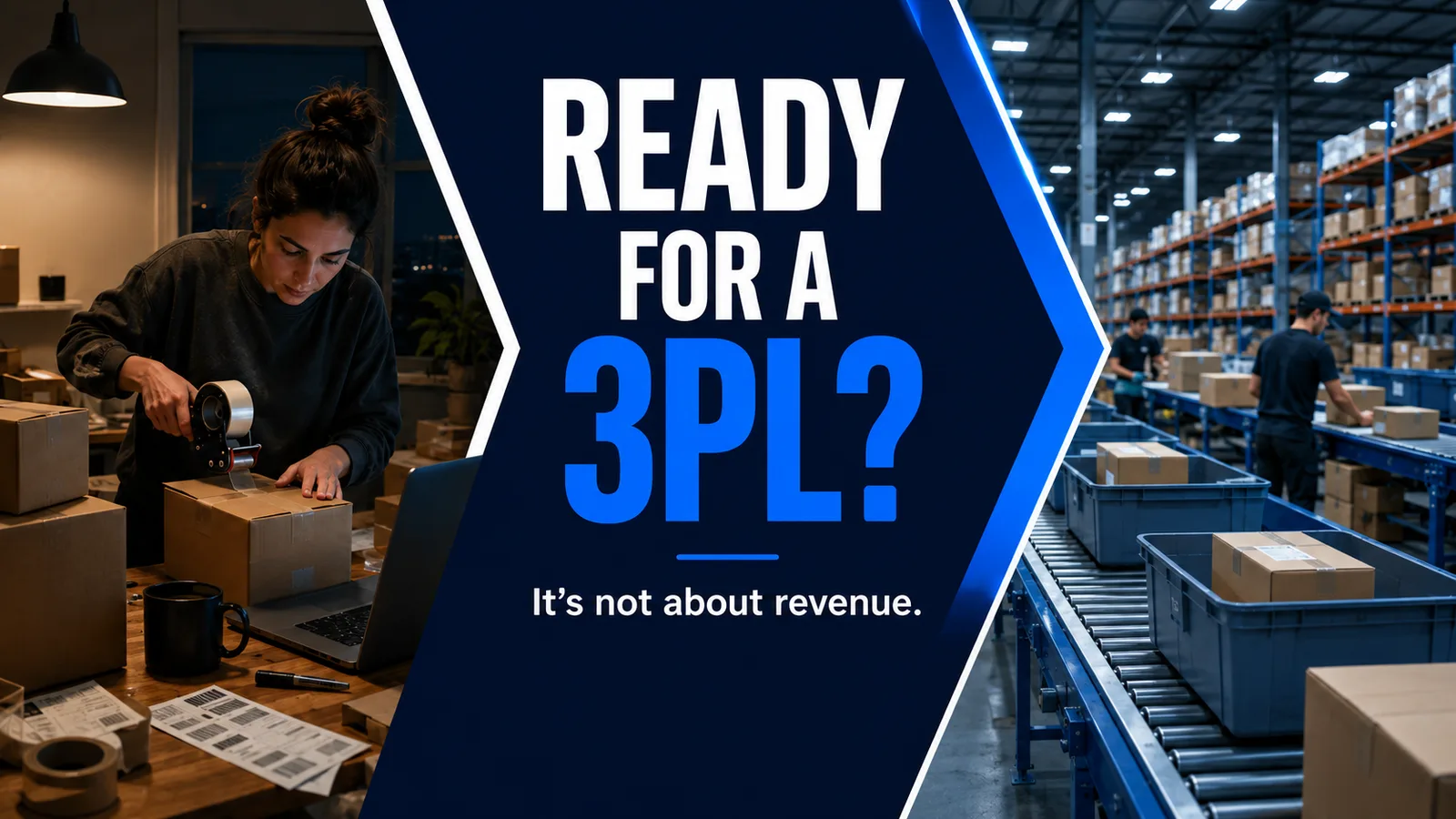
Most founders think 3PL-readiness is a revenue number.
Hit £1m, hit £2m, then outsource. It isn’t.
We’ve watched brands doing £3m a year still packing orders on the kitchen table, and brands doing £600k who were ready for a 3PL six months ago and didn’t know it. Revenue tells you almost nothing. These signals tell you a lot more.
Signal one: your time, not your turnover
Ask yourself how many hours a day go into picking, packing and printing labels. Not your team’s hours. Yours, or your co-founder’s.
Once that number creeps past an hour or two a day, every hour is coming straight out of the things that actually grow the business: product, marketing, partnerships. A founder packing boxes at 9pm isn’t running a growth-stage brand, they’re running a shipping desk that also sells things.
There’s no single universal order-volume threshold. But in practice, once a brand is shifting anywhere from 20 to 50 orders a day with any real complexity (multiple SKUs, variants, kitting, inserts), self-fulfilment starts to strain. Simple, lightweight, single-SKU products can push that number a lot higher before it becomes a problem.
Signal two: the volume is steady, not a one-off spike
A single good week doesn’t make you ready. A single viral TikTok doesn’t either.
What matters is a repeatable pattern: consistent weekly order volume that holds even after the spike settles. If you can look back three or four months and see a floor, not just a ceiling, that’s a real signal. If last month was an anomaly and this month is back to normal, you’re not there yet, you’re testing.
Signal three: growth spikes are starting to break things, not just stretch you
Home and small-unit fulfilment can absorb steady growth for a surprisingly long time. What it can’t absorb is a spike: a big promo, a press hit, a Black Friday weekend that goes better than planned.
If your last peak period meant missed dispatch windows, a scramble for temporary packing help, or stock you genuinely lost track of, that’s not a one-off. That’s the ceiling of your current model showing itself. The next spike will hit the same wall, just harder.
Signal four: you can actually answer the questions a 3PL will ask
This is the one brands underestimate most, and it’s the real readiness test.
A serious 3PL conversation isn’t “how much do you charge per order.” It’s a proper comparison built on your actual order profile: monthly volume, peak multiplier, SKU count, lines per order, units per order, parcel weight and dimensions, storage footprint, returns rate, international mix, packaging complexity, any wholesale or B2B requirements.
If you can pull together rough answers to most of that in twenty minutes, you’re in good shape. If your honest answer is “we’d have to dig through Shopify exports and guess,” that’s not a dealbreaker, but it is the actual gap to close before you’re ready, not a bigger revenue number.
Here’s the reassuring part: you don’t need perfect data. Ranges and reasonable estimates are enough to start a real conversation. What you can’t do is skip the exercise entirely and expect an accurate quote back.
Signal five: cost and errors are starting to cost you customers, not just money
Packing mistakes, late dispatch, and messy returns don’t stay operational problems for long. They turn into refunds, into support tickets, into a Trustpilot review that costs you more than the order was worth.
If fulfilment errors are starting to show up in your customer experience metrics, not just your own frustration, that’s less “we should think about this eventually” and more “this is actively costing revenue right now.”
If you’re not there yet, that’s a completely normal answer
Not being ready isn’t a failure state. Plenty of the strongest brands we work with self-fulfilled for a year or two longer than they expected to, on purpose, because the control and the tight feedback loop mattered more at that stage than the time saved.
If most of the signals above don’t apply yet, the highest-value thing you can do isn’t to rush into outsourcing. It’s to start tidying the data above (SKU dimensions, order profile, returns categorisation) so that whenever you are ready, the conversation is fast instead of a scramble.
When you are ready
When two or three of these signals are true at once, that’s usually the point brands come to us.
The Lead Exchange exists because comparing 3PLs properly, on a like-for-like basis rather than headline pick fees, is genuinely hard to do alone, and it carries no commission for brands because our vetted partners fund the network, not you. When the signals above start stacking up, that’s the conversation worth having.
Book a Call or email hello@shipmax.co.uk.
Not moving 3PL this year? Save this article for when you are.
Best, Phil
Founder, SHIPMAX LTD